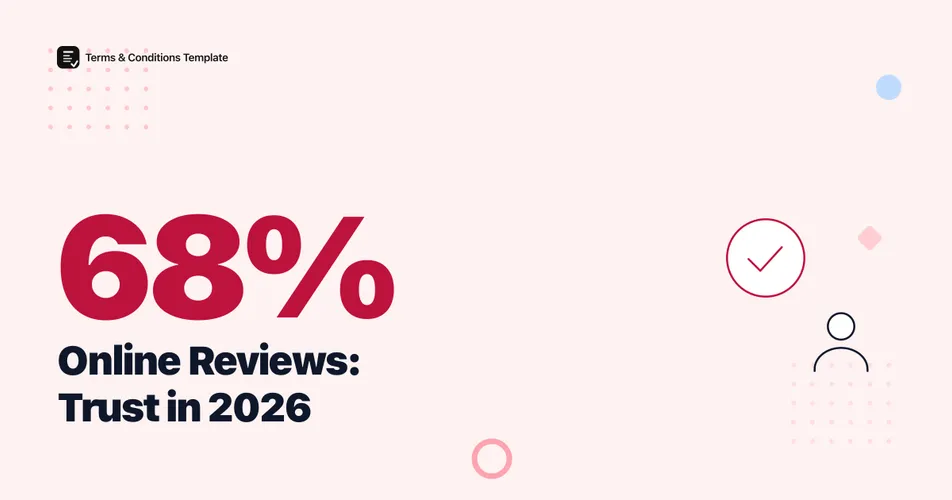
68% of consumers will not choose a business rated below 4 stars, up from 55% a year earlier, according to BrightLocal’s Local Consumer Review Survey, published in February 2026 from a sample of 1,002 US adults. That is the headline number in a broader dataset showing that review reading habits, trust levels, and the real financial stakes of both good and fake reviews are all rising together in 2026, not moving in isolation.
How many shoppers read reviews before making a purchase?
Nearly every consumer checks reviews first. BrightLocal’s 2026 survey found 97% of consumers read reviews for local businesses, and 41% now say they “always” read reviews before making a decision, a sharp jump from 29% just a year earlier. Only a small remainder, roughly 3%, report skipping reviews altogether.
Figure 1: Share of consumers who read reviews before choosing a local business. Source: BrightLocal, Local Consumer Review Survey, February 2026, n=1,002 US adults.
This is not a new habit, but the intensity of it keeps growing. An independent Pew Research Center survey of US adults, published back in December 2016, found 82% at least sometimes read online reviews before a first-time purchase, with 40% doing so “always or almost always.” A decade later, reading reviews has gone from a common habit to close to universal.
Do shoppers trust reviews as much as a personal recommendation?
Reading reviews and trusting them are two different things. BrightLocal’s 2026 data puts trust at 49%, meaning just under half of consumers place as much confidence in a stranger’s review as they would in a recommendation from a friend or family member. The company notes this figure has fluctuated rather than climbed steadily across more than 15 years of tracking the same question.
Independent academic research backs the underlying premise that reviews genuinely move behavior, not just opinion. Judith Chevalier and Dina Mayzlin’s study of book sales on Amazon.com and BarnesandNoble.com, first circulated as a 2003 NBER working paper and published in the Journal of Marketing Research in 2006, found that improved review ratings corresponded with better relative sales, and that the effect of a 1-star review was larger than the effect of a 5-star review. That asymmetry, bad reviews weighing more heavily than good ones, has held up as one of the more durable findings in the two decades of review research since.
Figure 2: Two decades of review trust research and enforcement, from the earliest causal evidence to today’s regulatory backstop. Sources: NBER; Journal of Marketing Research, 2006; Pew Research Center, 2016; UK Department for Business and Trade, 2023; FTC, 2024; BrightLocal, 2026.
Trust sitting near 50% while reading habits approach universal is not a contradiction. Consumers keep checking reviews because they still move purchase decisions, even while a large share of the audience remains skeptical of any individual review’s honesty.
How high does the star-rating bar go in 2026?
The bar consumers set for a minimum rating jumped in a single year. 92% of consumers say star ratings matter when choosing a business, and 68% will not use a business rated below 4 stars, up from 55% in 2025. The higher end moved even faster: 31% now require at least 4.5 stars, nearly double the 17% who said the same in 2025.
Figure 3: Minimum acceptable star rating, year over year. Source: BrightLocal, Local Consumer Review Survey, 2025 and 2026 editions.
| Metric | 2025 | 2026 |
|---|---|---|
| Always read reviews before deciding | 29% | 41% |
| Require at least 4 stars | 55% | 68% |
| Require at least 4.5 stars | 17% | 31% |
Source: BrightLocal, Local Consumer Review Survey, 2025 and 2026 editions, n=1,002 US adults (2026 wave).
A business sitting at 3.8 stars was viable in 2025. A year later, the same rating sits below the bar for more than two-thirds of shoppers.
How many reviews, and how recent, do shoppers require?
A high average rating is not enough on its own. 47% of consumers will not use a business that has fewer than 20 reviews, and only 9% are willing to use one with five or fewer. Recency matters just as much as volume: 74% of consumers specifically seek out reviews written in the last three months, favoring businesses that keep collecting fresh feedback over ones coasting on an old review base.
Figure 4: Minimum review count consumers require before trusting a business. Source: BrightLocal, Local Consumer Review Survey, February 2026.
Rating, volume, and recency now function as three separate filters a business has to clear, not one combined score.
Do negative reviews and business responses change buying decisions?
Negative reviews carry outsized weight, matching the asymmetry Chevalier and Mayzlin identified two decades ago. 77% of consumers say negative reviews make them less likely to choose a business. How a business responds matters almost as much as the review itself: 80% of consumers say they are likely to use a business that responds to every review, while 42% say they are unlikely to use one that never replies at all. A reply is not automatically a good one, though; 50% of consumers say generic or templated responses put them off.
Figure 5: The combined rating, volume, recency, and response test consumers now apply. Source: synthesized from BrightLocal, Local Consumer Review Survey, February 2026.
None of these filters operate alone. A business can clear the rating bar and still lose a customer over a stale review base or a templated reply to a complaint.
Where trust in reviews collides with fake reviews and disclosure risk
Trust in reviews is high enough to move real money, and that is exactly what makes a compromised review supply so costly. 93% of consumers have made a purchase after reading reviews, and 27% have spent more than $1,000 based on reviews alone. But that same trust cuts both ways: 70% of consumers say they have made a purchase they regretted after reading reviews, which is consistent with a review pool that is not fully reliable.
Reliability is a documented problem, not a guess. Our companion analysis found that up to 15% of online reviews are estimated fake, based on UK government-commissioned research auditing 2.1 million reviews. The FTC’s Trade Regulation Rule on the Use of Consumer Reviews and Testimonials, effective October 21, 2024, now bans buying or selling fake reviews, undisclosed insider reviews, and suppressing negative feedback through contract terms, with penalties reaching $53,088 per violation. The same disclosure principle applies to sponsored endorsements more broadly. Our data on influencer sponsorship disclosure found 96% of sponsored posts in one peer-reviewed dataset carried no disclosure at all, and a separate look at sponsored content ad spend found 70% of consumers react negatively once they learn a partnership went undisclosed. Native advertising, a related disclosure category the FTC also polices, follows the same pattern but is outside the scope of this post.
Any business collecting reviews, testimonials, or incentivized feedback sits inside this same regulatory category. A clear, current reviews and testimonials disclaimer covering how reviews are solicited, verified, and disclosed is the cheapest way to stay on the right side of a rule that now treats fake and undisclosed reviews the same way it treats an undisclosed sponsorship.
| Consumer behavior | Share | Source |
|---|---|---|
| Made a purchase after reading reviews | 93% | BrightLocal, 2026 |
| Spent more than $1,000 based on reviews | 27% | BrightLocal, 2026 |
| Made a purchase they regretted after reading reviews | 70% | BrightLocal, 2026 |
| Say negative reviews reduce likelihood of choosing a business | 77% | BrightLocal, 2026 |
| Likely to use a business that responds to every review | 80% | BrightLocal, 2026 |
Source: BrightLocal, Local Consumer Review Survey, February 2026.
The Bottom Line
The headline shift in 2026 is not that reviews matter, it is how much higher the bar has climbed in a single year. 68% of consumers now reject any business below 4 stars, up from 55% in 2025, and reading reviews has gone from a common habit to something 97% of consumers do. Trust in any individual review still sits closer to a coin flip at 49%, and with good reason: up to 15% of reviews are estimated fake, and 70% of shoppers say they have been burned by a review-driven purchase they regretted. For a business owner, the response is the same one that already applies to sponsored content and influencer disclosures: collect reviews honestly, respond to them specifically rather than generically, and publish a disclaimer that says plainly how reviews are gathered and verified.
Frequently Asked Questions
What percentage of consumers read online reviews before buying? 97% of consumers read reviews for local businesses, and 41% now say they always do so, up from 29% a year earlier, according to BrightLocal’s Local Consumer Review Survey, published in February 2026 from a sample of 1,002 US adults.
Do consumers trust online reviews as much as personal recommendations? 49% of consumers trust online reviews as much as a personal recommendation from someone they know, per BrightLocal’s 2026 survey, a figure the firm says has fluctuated over more than 15 years of tracking. An independent 2016 Pew Research Center survey of US adults found a similar split: 51% said reviews generally give an accurate picture of quality, while 48% said it is often hard to tell if a review is truthful.
What star rating do most businesses need to win a customer in 2026? 68% of consumers will not choose a business rated below 4 stars in 2026, up sharply from 55% in 2025, and 31% now require at least 4.5 stars, up from 17% in 2025, according to BrightLocal’s Local Consumer Review Survey.
How do negative reviews and fake reviews affect trust? 77% of consumers say negative reviews make them less likely to choose a business, and long-standing academic research on Amazon and Barnes and Noble book sales found negative reviews carry more weight with buyers than positive ones do (Chevalier and Mayzlin, Journal of Marketing Research, 2006). Separately, up to 15% of online reviews are estimated fake according to UK government-commissioned research published in 2023, and the FTC’s 2024 rule on fake reviews now carries penalties of up to $53,088 per violation.
Sources and References
- BrightLocal. (2026). “Local Consumer Review Survey 2026.” Published February 11, 2026. Survey of 1,002 US adult consumers conducted via SurveyMonkey. BrightLocal sells local SEO and reputation management software to businesses, and has a commercial interest in businesses believing reviews are important; this is its own annually repeated consumer survey, disclosed sample size 1,002.
- Pew Research Center. (2016). “Online Reviews.” Published December 19, 2016. Independent nonprofit survey of US adults; provided as historical, non-2026 context, not the headline figure.
- Chevalier, J. and Mayzlin, D. (2003, published 2006). “The Effect of Word of Mouth on Sales: Online Book Reviews.” NBER Working Paper 10148; published in the Journal of Marketing Research, 2006. Independent peer-reviewed academic study of Amazon.com and BarnesandNoble.com book sales.
- Federal Trade Commission. (2024). “FTC Announces Final Rule Banning Fake Reviews and Testimonials.” Announced August 14, 2024, effective October 21, 2024.
- UK Department for Business and Trade / Alma Economics. (2023). “Fake Online Reviews Research: Executive Summary.” Published April 25, 2023. 2.1 million reviews audited across 9 UK e-commerce platforms.
Note: All figures verified as of September 2026. Review trust and rating thresholds shift as new survey waves publish, so headline figures here are refreshed at least twice a year.
![$68.6B: Amazon Advertising 2026 [Spend Data]](/_astro/amazon-advertising-2026.DFxB0rDi_1ebTR.webp)
![Amazon Affiliate Rate Falls to 10% in 2026 [Full List]](/_astro/commission-programs-2026.DvBRm6Oc_Z44gbJ.webp)