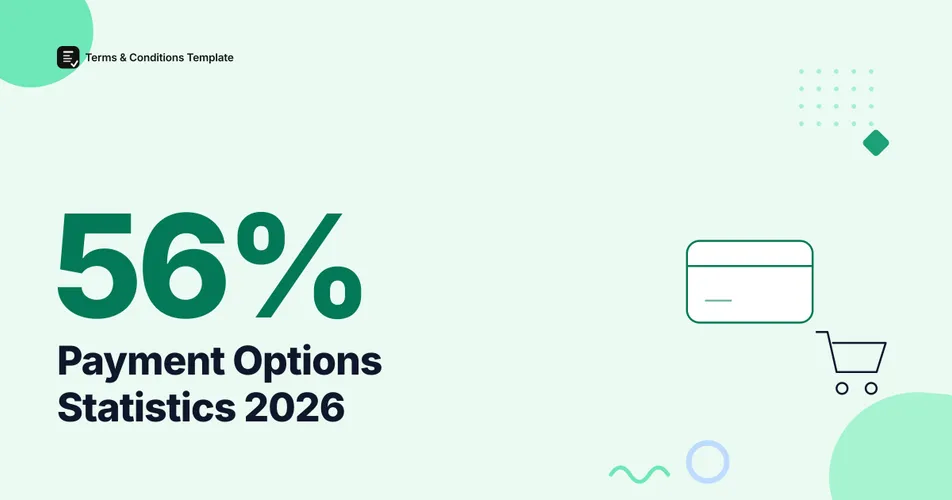
Payment choice now decides who gets the sale. Digital wallets processed 56% of global ecommerce value in 2025, according to Worldpay’s Global Payments Report 2026, which tracks payment data across 42 markets, making wallets the world’s leading way to pay online. Meanwhile, 9% of shoppers abandon checkout entirely when their preferred payment method is missing, per Baymard Institute’s 2025 checkout research. Payment options are not a back-office detail; they are a conversion lever.
That lever pulls differently depending on where your customers are. A checkout built around US shopper habits, where digital wallets cover only 40% of online spend, misses most of the market in China, India, or Germany, where wallets already dominate.
What percentage of online payments go through digital wallets?
Digital wallets, Apple Pay, Google Pay, PayPal, Alipay, WeChat Pay, and similar apps, processed 56% of global ecommerce value in 2025, per Worldpay’s Global Payments Report 2026. That makes wallets the single largest online payment category worldwide, ahead of credit cards, debit cards, and bank transfers combined in most markets.
Figure 1: Digital wallet share of online spend by market, 2025. Source: Worldpay Global Payments Report 2026.
The country-level spread is the real story. China leads at 89% of ecommerce value through Alipay and WeChat Pay combined, and India’s UPI-driven wallet ecosystem covers 68% of online spend. APAC as a region averages 77%. Germany sits close to the global average at 52%, while the United States trails at 40%, still wallet-led but with more room for cards and other methods than any other major market in this data.
How much revenue do stores lose from limited payment options?
9% of shoppers abandon a purchase specifically because their preferred payment method was not offered, according to Baymard Institute’s 2025 checkout usability research. That number sits behind two bigger abandonment drivers in Baymard’s data: unexpected extra costs at checkout (48%) and an overly complicated checkout process (17%).
Figure 2: Top checkout abandonment reasons tied to cost and payment friction. Source: Baymard Institute, 2025 checkout research.
Nine percent sounds small until it is converted into dollars. For a store doing 1 million dollars a year in online revenue, a 9% abandonment rate tied purely to missing payment methods represents real, recoverable revenue, often fixable by adding one or two of the payment options your specific customer base actually expects. A clear refund policy generator that states supported payment methods and how refunds are issued for each one removes a second, related source of pre-purchase hesitation: shoppers who are unsure how they will get their money back if the order goes wrong.
Is buy now, pay later actually changing how people check out?
BNPL already accounts for 6% of US ecommerce value in 2025, according to Worldpay’s Global Payments Report 2026, which forecasts roughly 13% annual growth for the category through 2030. That is a meaningful slice of checkout volume for a payment method that barely existed at scale a decade ago, though it remains well behind digital wallets and cards in absolute size.
Figure 3: US online payment method mix, 2025. Source: Worldpay Global Payments Report 2026.
Warning
BNPL growth figures vary by report and metric. Some industry compilations cite global BNPL gross merchandise value near 560 billion dollars for 2025, while Worldpay’s own forecast trajectory implies a smaller current global base growing toward roughly 500 billion dollars by 2030. These come from different methodologies and are not directly comparable. The 6% US ecommerce-value figure above is the single number we can attribute cleanly to one named, current report.
Are credit cards losing ground to other payment methods?
Yes, and the forecast is specific. Worldpay’s Global Payments Report 2026 projects credit cards’ share of global online payment value falling from 23% in 2025 to 18% by 2030, as digital wallets and account-to-account payments absorb the difference. Debit cards at physical point of sale follow a similar trajectory, forecast to fall from 43% to 37% over the same period.
Figure 4: Credit cards’ forecast share of global online payment value, 2025 versus 2030. Source: Worldpay Global Payments Report 2026.
This is a five-year forecast, not a current fact, so treat the 2030 figure as directional. But the direction itself, cards losing share to wallets and account-to-account rails, matches every regional breakdown in this report and is consistent with the country-level wallet dominance shown in Figure 1.
How should a store decide which payment methods to add?
The data above points to a simple prioritization order rather than a one-size-fits-all checkout.
Figure 5: A simple decision path for prioritizing new payment methods. Source: synthesized from Worldpay and Baymard data above.
Adding methods without checking this order wastes integration effort on a payment type your customers were never going to use. This connects directly to the broader checkout-friction picture: see our cart abandonment statistics for 2026 for how payment friction compares to shipping costs and account-creation requirements as abandonment causes, and our one-click checkout adoption data for how merchants are compressing the number of steps between payment selection and order confirmation.
Payment options by market: the numbers side by side
| Market | Digital wallet share (2025) | Notable secondary method | Source |
|---|---|---|---|
| China | 89% | Alipay, WeChat Pay | Worldpay GPR 2026 |
| APAC (region average) | 77% | UPI, local super-apps | Worldpay GPR 2026 |
| India | 68% | UPI | Worldpay GPR 2026 |
| Global average | 56% | Credit cards, ~23% | Worldpay GPR 2026 |
| Germany | 52% | Cards, SEPA transfer | Worldpay GPR 2026 |
| United States | 40% | Credit cards, 32% | Worldpay GPR 2026 |
The Bottom Line
Payment options are a conversion feature, not a back-office setting. Digital wallets already carry 56% of global ecommerce value, and in China and India that share is closer to two-thirds or more. A checkout that ignores this, or that simply copies whatever a US-based platform ships by default, is leaving the 9% of shoppers who will not complete a purchase without their preferred method on the table. The fix is not adding every payment method available; it is matching the two or three that dominate your actual customer countries.
Frequently Asked Questions
What percentage of online payments go through digital wallets? Digital wallets accounted for 56% of global ecommerce value in 2025, according to Worldpay’s Global Payments Report 2026, which covers payment data across 42 markets. In China, that share reaches 89% through Alipay and WeChat Pay combined.
How many shoppers abandon checkout over payment method limits? 9% of shoppers abandon checkout specifically because their preferred payment method was not offered, according to Baymard Institute’s 2025 checkout research. Missing payment options rank behind unexpected extra costs (48%) and complicated checkout (17%) as reasons for abandonment.
How big is buy now, pay later in ecommerce? BNPL accounted for 6% of US ecommerce value in 2025, according to Worldpay’s Global Payments Report 2026, which forecasts continued growth at roughly 13% a year through 2030.
Are credit cards losing share to other payment methods? Yes. Worldpay’s Global Payments Report 2026 forecasts credit cards’ share of global online payment value falling from 23% in 2025 to 18% by 2030, as digital wallets and account-to-account payments take share.
Sources and References
- Worldpay (Global Payments). (2026). “Global Payments Report 2026.” Payment method share data across 42 markets.
- Baymard Institute. (2025). “Cart Abandonment Rate Statistics.” Meta-analysis of 49 published studies; checkout abandonment reason breakdown from Baymard’s own checkout usability research.
- Worldpay. (2025). “Global Payments Report 2025.” Prior-year baseline data.
Note: All figures verified as of August 2026. Payment method adoption shifts quickly with new wallet and BNPL launches, so headline figures are refreshed at least twice a year.